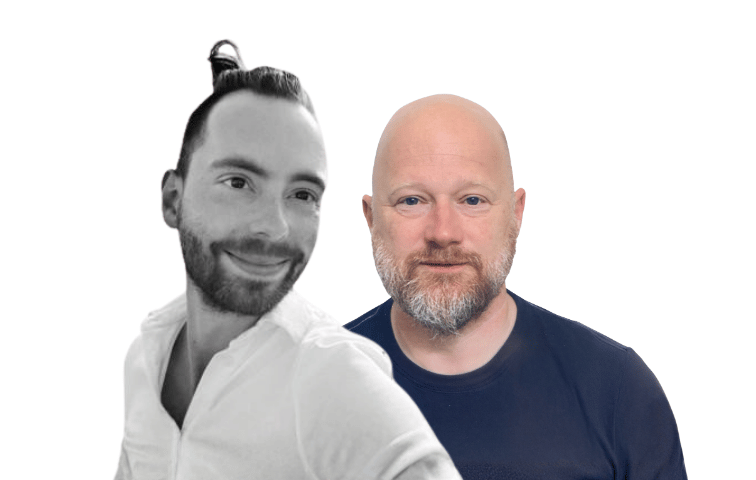
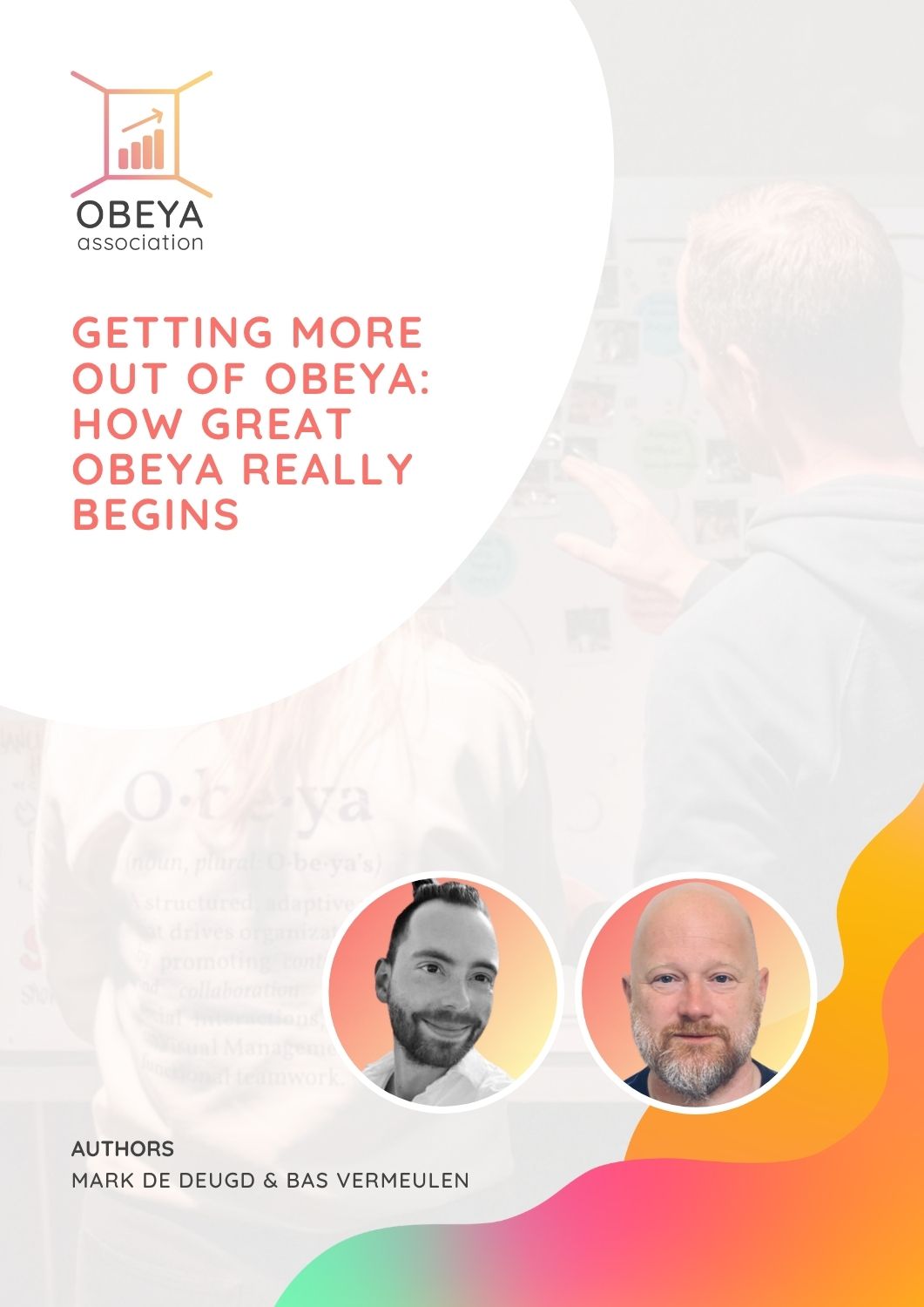
Authors of this article: Mark de Deugd and Bas Vermeulen
Mark and Bas are organizational transformation specialists, agile coaches, and visual facilitation practitioners who help teams navigate complexity through shared understanding, collaboration, and brain-friendly ways of working. Their combined expertise in leadership, Lean Six Sigma, agile transformation, and visual thinking has helped organizations create stronger alignment, better decisions, and more effective Obeya practices.
Getting More Out of Obeya: How Great Obeya Really Begins
The best Obeya rooms are not built by filling walls with information. They are built by creating shared understanding before execution begins.
Many organisations invest significant time designing their Obeya walls.
Far fewer invest time preparing the thinking that should happen before the first wall is ever created.
In this article, Mark de Deugd and Bas Vermeulen introduce Obeya Genkan (玄関), a structured visual preparation phase that helps teams create alignment, ownership, and clarity before entering the Obeya itself.
After applying the approach across more than 100 complex projects, they found that many organisational challenges were not caused by poor execution.
They were caused by starting before people truly understood:
- the real goal
- the risks involved
- the dependencies
- and what success actually looked like
What you’ll learn
- Why many Obeya initiatives start too late
- How Obeya Genkan creates alignment before execution begins
- Why shared understanding is more valuable than immediate solutions
- How visual thinking surfaces risks, assumptions, and dependencies early
- Why better decisions emerge when teams shape the problem together
The article introduces a simple but powerful idea:
Create shared understanding before creating the Obeya
Rather than jumping straight into dashboards, KPIs, and planning boards, teams first work together to:
- clarify the goal behind the goal
- make objectives measurable
- identify risks and unknowns
- create ownership for next actions
Results across 100+ projects
Using Obeya Genkan, organisations achieved:
- 90% early visibility of risks and dependencies
- 100% agreement on scope and first actions
- 85% success in translating strategy into meaningful metrics
- approximately 40% less meeting overhead
- stronger ownership and faster decision-making
One lesson stood out across all cases:
The value was never the board itself. The value was what we achieved together because of it.
If your Obeya still feels more like reporting than decision-making, this article offers a practical way to start differently.
Download the full article and explore the complete approach
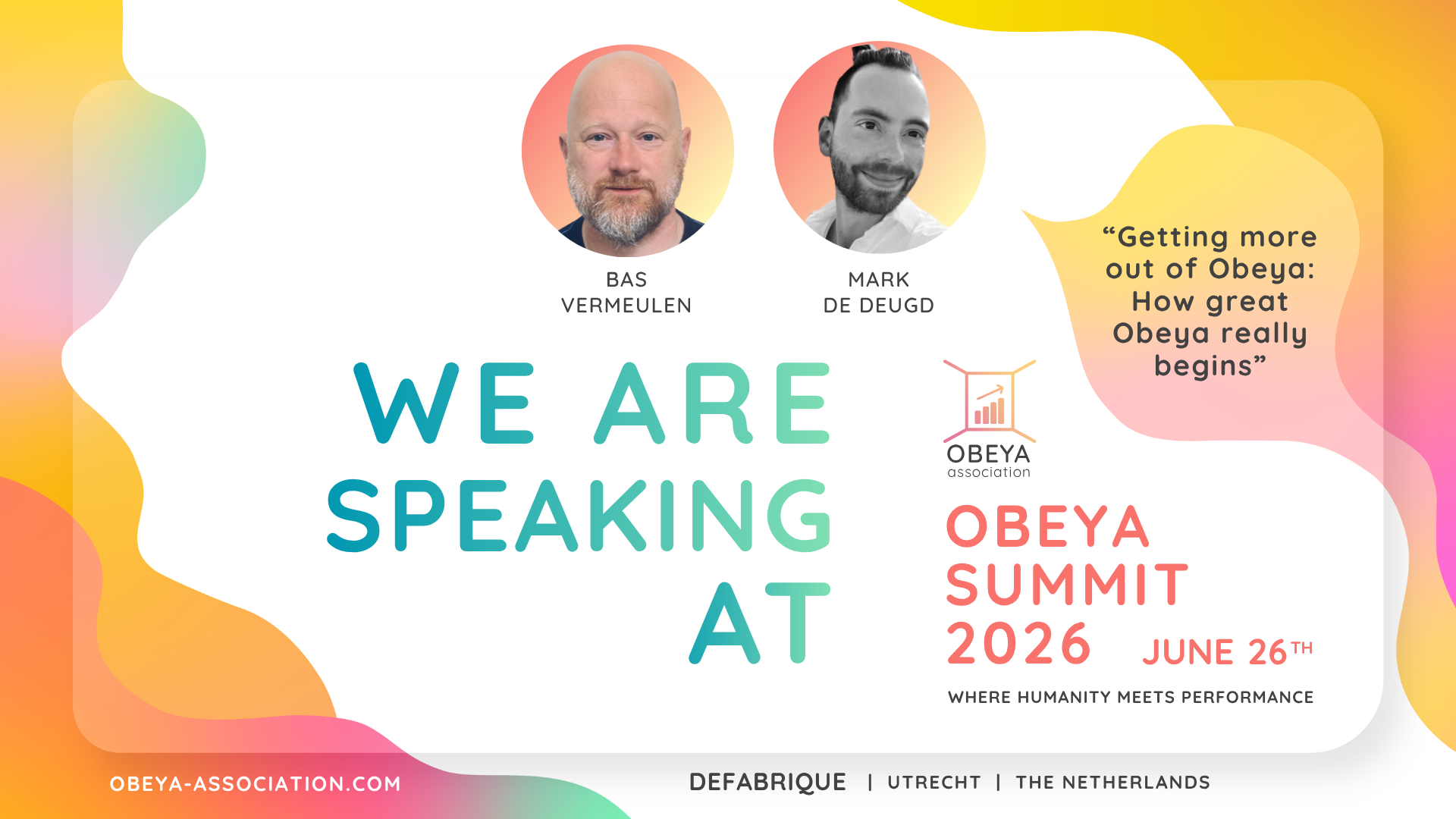
Mark de Deugd and Bas Vermeulen will be speaking at the Obeya Summit on June 25–26, 2026.
Related Articles
Making the Invisible Visible – How Obeya Drives Safe Execution on Complex Capital Projects
Author of this article: Nynke Bel Nynke Bel is ...
Strategy Execution with Obeya-driven Portfolio Management
Author of this article: Felice Davies, Jelger Haanstra and ...

No Title – No Problem
Author of this article: Berrie Duijx Berrie Duijx is ...