
Author of this article: Dr. Gwendolyn Galsworth
Gwendolyn Galsworth, PhD, is a widely-recognized visual workplace/visual management expert, credited with codifying visual workplace concepts, principles, and technologies into a single, coherent framework of knowledge and know-how. Founder/president of Visual Thinking Inc. and Visual Thinking Europe, Dr. Galsworth is a hands-on practitioner who, for over 30 years, has led visual conversions and trained internal and external consultants on five continents, helping them accelerate their rate of transformation, strengthen cultural alignment, and achieve long-term sustainable results through her nine core visual workplace technologies.
Her academy, The Visual-Lean® Institute trains and certifies internal trainers and external consultants in those methods. Dr. Galsworth is author of seven books, including Visual Workplace-Visual Thinking and Work That Makes Sense, both winners of Shingo Research Award. She is currently completing two new books: Visual Problem Solving for Chronic, Costly, Complex Problems: The ScoreBoard Method and Your Obeya: Powered by Visual Thinking.
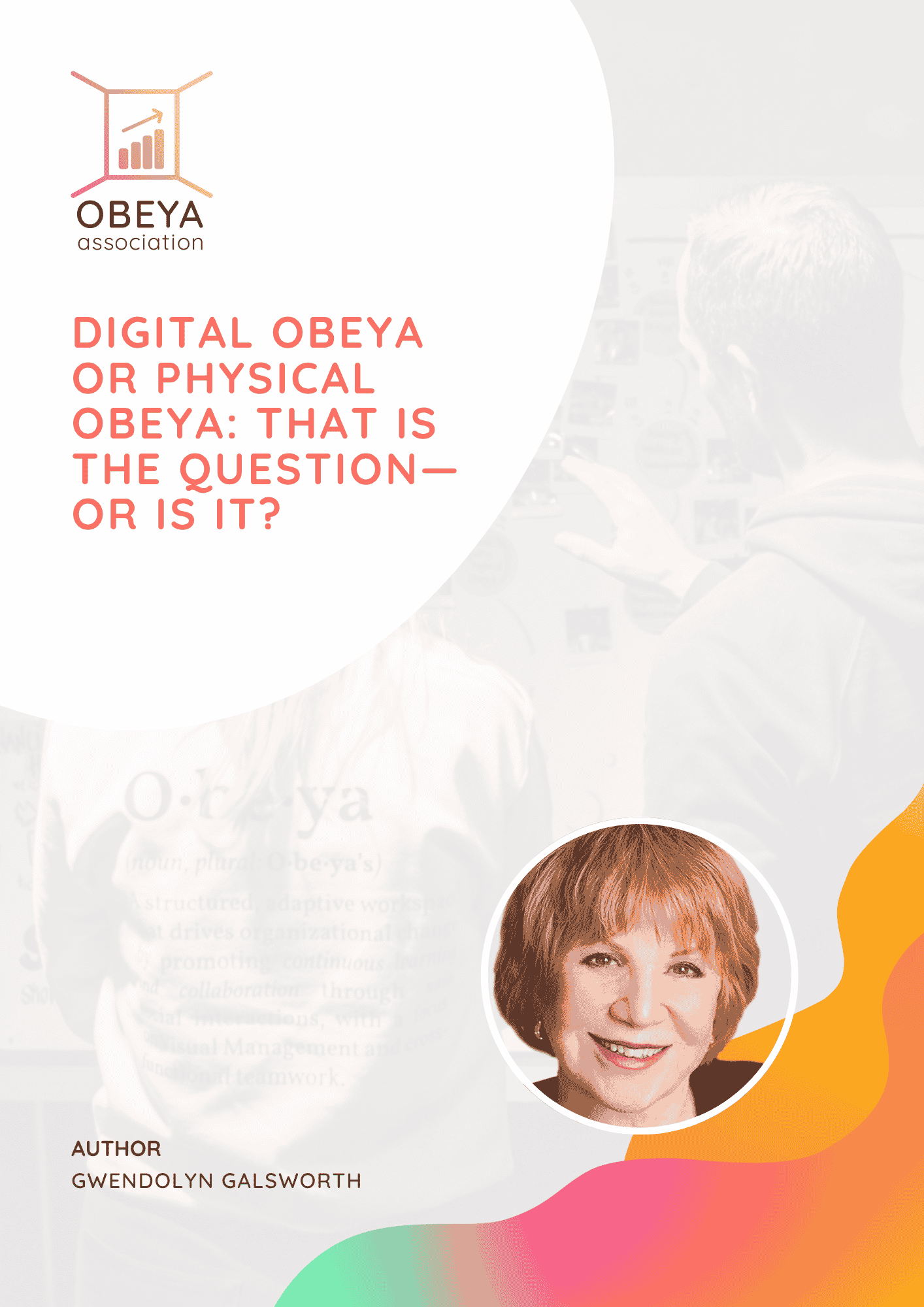
Digital Obeya or Physical Obeya: That is the Question, Or Is It?
Physical boards do something the human brain is exquisitely designed for. Digital boards do something entirely different.
As organisations scale their Obeya practice, one question keeps returning:
Should Obeya be digital or physical?
In this article, Gwendolyn Galsworth explores why this is the wrong debate.
She argues that digital and physical Obeya environments each support fundamentally different forms of thinking, interaction, and decision-making, and that understanding the science behind those differences is essential for effective Obeya design.
Rather than choosing one over the other, she introduces a more powerful perspective:
The hybrid Obeya model
An environment where:
- digital Obeya supports continuity, access, and data integration
- physical Obeya enables exploration, interaction, and cognitive engagement
- teams can think, challenge, analyse, and decide together in real time
What you’ll learn
- Why digital boards often weaken engagement and interaction
- Why physical boards support deeper cognitive processing
- The science behind embodied cognition and visual thinking
- How hybrid Obeya environments combine the strengths of both worlds
- Why Obeya should function as a cognitive framework, not just a visual tool
Download the full article and read the full story
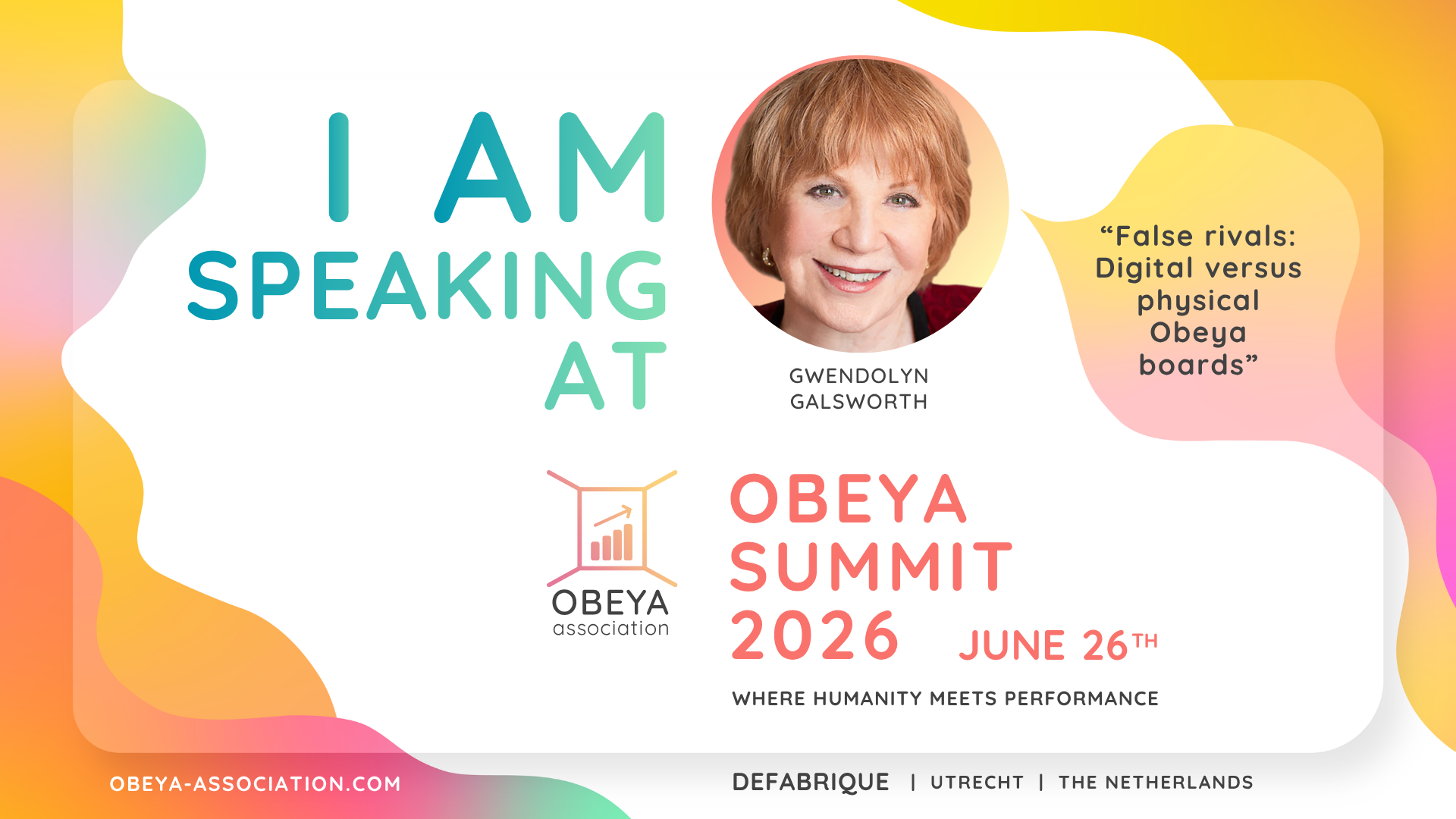
Sidsel will be speaking at the Obeya Summit on June 25–26, 2026.
Related Articles

Making the Invisible Visible – How Obeya Drives Safe Execution on Complex Capital Projects
Author of this article: Nynke Bel Nynke Bel is ...

Strategy Execution with Obeya-driven Portfolio Management
Author of this article: Felice Davies, Jelger Haanstra and ...

No Title – No Problem
Author of this article: Berrie Duijx Berrie Duijx is ...